Myoko Home Subsidies: Buying, Renovating and Moving In, Who Qualifies
This guide is for people in Australia and elsewhere overseas who are thinking of buying and fixing up a house in Myoko. Myoko City offers money towards buying a home, renovating it, clearing out an old house and making a roof safer in heavy snow. The catch is simple: most of it is for people who will actually live in Myoko. Here is who qualifies and how much each scheme pays in fiscal 2026 (April 2026 to March 2027).
Everything below comes from Myoko City's own pages and leaflets, all read on 5 October 2026. Subsidies change every year and often close early when the budget runs out, so check with the city before you sign anything. This is general information, not advice on your own case.
The big rule: you have to live here
The city's main home scheme is for people who buy or renovate a house to live in themselves. A newcomer must register as a resident of Myoko and start living in the house before filing the final report. If the city later finds that nobody really lives at the address, it may ask for the money back.
The city's Q&A is direct about this. A person who has no resident registration in Myoko and does not live there does not qualify. So a holiday home that you only visit does not fit this scheme.
The home purchase and renovation scheme
The scheme's full name is the Myoko City subsidy for buying homes that are kind to families and the environment. For fiscal 2026, the city accepts applications from 1 April 2026 to 26 February 2027. The purchase or the building work must be finished by 31 March 2027. For a purchase, that means the property registration must also be complete.
The scheme treats two groups differently:
- Newcomers (any age). People who moved to Myoko less than a year before applying, or people registered elsewhere who will register and start living in Myoko before the final report.
- Current residents (under 40). People already registered and living in Myoko, who are under 40 on the day they apply and have no unpaid city taxes.
The rest of this section describes the newcomer side, since that is where most readers of this Journal would fit.
Buying a home: up to ¥2.8 million for a new one
The house must be a detached home with at least 50 square metres of floor space. It needs living rooms, a toilet, a kitchen and a bath. You must own at least half of it, and it must be registered in your name. A house with a shop or other business part can count if at least half the floor space is the home. The city's Q&A says this also applies to a pension (a small guesthouse) that you buy.
- For a newcomer, the most the city pays for a new or newly built home is ¥2.8 million, made up of several parts.
- For a second-hand home, the most is ¥1.4 million. The base part is up to 5% of the purchase price, capped at ¥500,000. On top come ¥500,000 for moving in from outside the city, ¥200,000 if the house is inside the city's residential guidance area, and ¥200,000 for newly married couples.
- The total, including the extra amounts, cannot be more than a quarter of the purchase price.
There are limits. You must sign a proper sales or building contract. A house you inherit or receive as a gift does not count, and neither does land on its own. A second-hand house that has used this subsidy before is also excluded.
Renovating: up to ¥1.2 million
A newcomer who extends or renovates a home they will live in can get a quarter of the cost, up to ¥500,000. The house can be one you already own or a second-hand home you are buying. The work must add up to ¥1 million or more, including tax. Several jobs, and several builders, can be added together to reach that amount. On top of this, the city pays ¥500,000 for moving in from outside the city and ¥200,000 for using a builder based in Myoko. The most a newcomer can get is ¥1.2 million.
The city's list of eligible work is long. It includes:
- large repairs to the roof and outer walls, and work on foundations
- kitchens, bathrooms and other water areas
- new or improved hot water, plumbing, heating and cooling
- wood or pellet stoves, insulation and LED lighting
- snow fences and snow protection, and snow-melting systems such as heated driveways
- connection to the sewer, or a new septic tank
- barrier-free work, waterproofing and asbestos removal
Some work is not covered. Examples are curtains and blinds, termite treatment, gardens and fences, and equipment bought without any building work. Earthquake strengthening is not on this list either. The city runs a separate scheme for that (see below).
If you buy a second-hand home and renovate it at the same time, you can apply for both. The extra ¥500,000 for moving in from outside the city is paid only once, though.
Clearing out an empty house: up to ¥200,000
Say you buy a house listed on the city's vacant house bank (akiya bank) to live in. The city then pays up to two thirds of the cost of clearing out old furniture and belongings, to a limit of ¥200,000. The work must be done by a waste company licensed by Myoko City. Cleaning on its own does not count. The Q&A adds that household altars (kamidana and butsudan) can be included, but graves cannot.
Timing: apply before you start
The order matters. If you apply too late, you lose the subsidy.
- New build, renovation or clearing out: apply after signing the contract and before any work starts.
- Second-hand or newly built home: apply within 30 days of signing the sales contract.
- Second-hand home plus renovation: apply within 60 days of signing the renovation contract.
The city reviews each application and sends its decision by post. If needed, it also checks the house on site. If the purchase or the work is not finished by 31 March 2027, the approval is cancelled and you cannot apply again the next year. If you use another city subsidy for the same project, the city takes that amount off this one.
Earthquake and energy-saving work
A separate city scheme helps with earthquake work and energy-saving work. For fiscal 2026, the energy-saving part (insulation, LED lighting, efficient air conditioners and similar) has already closed, because its budget ran out. The earthquake part is still open until 29 January 2027, while the budget lasts.
This scheme covers homes in Myoko that the applicant owns or lives in. It cannot be combined with other Myoko City subsidies. Its leaflet points newcomers who registered less than a year ago towards the home purchase and renovation scheme above. Our guide to old houses and the 1981 standard explains the earthquake side in detail.
Snow-proofing the roof
Myoko also helps with work that means you no longer have to climb up and clear snow. This covers roofs that melt snow, shed it, or are strong enough to carry it. The city also pays towards anchors that make roof work safer. For fiscal 2026, it takes applications until 11 December 2026, while the budget lasts.
- For a snow-melting roof, a standard household gets the work cost × 0.264 × 2/3. The cap is ¥440,000 outside the residential guidance area and ¥640,000 inside it.
- For a roof that sheds or carries snow, it is the work cost × 0.264 × 1/2. The cap is ¥330,000 outside the area and ¥530,000 inside it.
- For roof safety anchors, a standard household gets half the cost, up to ¥150,000.
To apply, you must live in Myoko or plan to move there, and the work must be on the home you live in. People who plan to move in must sign a pledge that they will settle in the city. You cannot get this subsidy if you are also receiving the home purchase and renovation subsidy.
The relocation grant is for people leaving Tokyo
You may read about Myoko's relocation grant. It is not designed for people moving from overseas. The fiscal 2026 leaflet says you must have lived in Tokyo's 23 wards for at least five of the last ten years, and for the full year just before you moved. Commuting into the 23 wards from the wider Tokyo area also counts. You must then start a job through Niigata Prefecture's job site, get a prefectural start-up grant, or keep your Tokyo job by working remotely.
The grant is ¥600,000 for a single person and ¥1 million for a household of two or more. You must apply within a year of moving in, and intend to stay five years or more. If you leave Myoko within three years of applying, you repay the whole grant. If you leave between three and five years, you repay half.
Schemes that have closed
Myoko's rent subsidy for people moving to the city (the UI-turn housing support subsidy) stopped taking new applications at the end of fiscal 2025. People already approved keep receiving it until their period ends. An older page for a general home renovation scheme from fiscal 2024 is also still online, and that scheme is closed.
Demolishing a dangerous empty house
If you own a house in Myoko that the city has formally judged dangerous, the city pays half the demolition cost, up to ¥500,000. Legal heirs count as owners. For fiscal 2026, applications run until 30 November 2026, and the work and payment must be finished by 31 March 2027. You must have no unpaid city taxes, and everyone with rights over the property must agree. The subsidy does not apply if you or a close relative are knocking the house down to rebuild.
A checklist before you buy
- Decide whether you will really live in Myoko. Most of these schemes need resident registration and actual residence.
- Talk to the city's migration support team before you sign a contract.
- Check that the house has at least 50 square metres, a kitchen, a toilet and a bath.
- Ask whether the address is inside the residential guidance area. Several amounts are higher there.
- Get written quotes. The city wants them with the application.
- Do not start work before you apply. Watch the 30-day and 60-day limits.
- Plan to finish by 31 March of the same fiscal year.
What we could not verify, and therefore left out
- Whether a buyer who keeps a home overseas and spends only part of the year in Myoko would pass the city's test of actually living there.
- Whether a holiday-home owner who does not live in Myoko can use the earthquake scheme as an owner.
- How the extra amount for children under 18 works in the relocation grant. The leaflet shows a figure, but we could not confirm how it applies.
- The full breakdown of the ¥2.8 million for new homes, which depends on insulation grades and solar equipment.
- How much budget is left in each scheme today.
- Any national or Niigata Prefecture subsidies that might apply on top of the city's.
Related guides
- Old Houses in Myoko and Japan's 1981 Earthquake Standard: Checks and Help
- Clearing Roof Snow in Myoko Safely: Official Advice and Accident Numbers
More from the Journal
Browse every guide in the Myoko Kogen Journal. This guide is general information, not professional advice.
Sources
All URLs retrieved 2026-10-05.
- Myoko City — 住宅に関する補助制度 (overview of the city's housing subsidies): https://www.city.myoko.niigata.jp/docs/67814.html
- Myoko City — 支援制度 (support schemes for people moving to Myoko): https://www.city.myoko.niigata.jp/myoko-life/support/
- Myoko City — 妙高市家族と環境にやさしい住宅取得等支援事業補助金 (application window, completion deadline): https://www.city.myoko.niigata.jp/docs/4807.html
- Myoko City — 令和8年度 住宅取得等支援事業パンフレット (who qualifies, amounts, eligible works, deadlines, Q&A): https://www.city.myoko.niigata.jp/fs/2/8/8/2/2/6/_/R8%E4%BD%8F%E5%AE%85%E5%8F%96%E5%BE%97%E7%AD%89%E6%94%AF%E6%8F%B4%E4%BA%8B%E6%A5%AD%E3%83%91%E3%83%B3%E3%83%95%E3%83%AC%E3%83%83%E3%83%88.pdf
- Myoko City — 令和8年度 妙高市安全・快適住まいづくり支援事業 (energy-saving works closed, seismic works open): https://www.city.myoko.niigata.jp/docs/4786.html
- Myoko City — 令和8年度 安全・快適住まいづくり支援事業パンフレット (eligible houses, no combining with other city subsidies): https://www.city.myoko.niigata.jp/fs/2/8/7/8/0/2/_/%E4%BB%A4%E5%92%8C8%E5%B9%B4%E5%BA%A6%E5%AE%89%E5%85%A8%E3%83%BB%E5%BF%AB%E9%81%A9%E4%BD%8F%E3%81%BE%E3%81%84%E3%81%A5%E3%81%8F%E3%82%8A%E6%94%AF%E6%8F%B4%E4%BA%8B%E6%A5%AD%E3%83%91%E3%83%B3%E3%83%95%E3%83%AC%E3%83%83%E3%83%88.pdf
- Myoko City — 令和8年度 妙高市雪国妙高住まいの克雪対策推進事業 (snow-proofing works, rates, caps, window): https://www.city.myoko.niigata.jp/docs/4790.html
- Myoko City — 令和8年度 克雪対策推進事業パンフレット (who qualifies, settlement pledge): https://www.city.myoko.niigata.jp/fs/2/9/4/6/2/7/_/%E3%80%90R8.8.3%EF%BD%9E%E3%80%91R8%E5%B9%B4%E5%BA%A6%20%E9%9B%AA%E5%9B%BD%E5%A6%99%E9%AB%98%E4%BD%8F%E3%81%BE%E3%81%84%E3%81%AE%E5%85%8B%E9%9B%AA%E5%AF%BE%E7%AD%96%E6%8E%A8%E9%80%B2%E4%BA%8B%E6%A5%AD%20%E3%83%91%E3%83%B3%E3%83%95%EF%BC%88%E4%B8%80%E8%88%AC%E7%94%A8%EF%BC%89.pdf
- Myoko City — 妙高市移住支援事業助成金 (relocation grant, fiscal 2026 window): https://www.city.myoko.niigata.jp/docs/2500.html
- Myoko City — 令和8年度 移住支援事業助成金 leaflet (Tokyo residence rule, amounts, repayment): https://www.city.myoko.niigata.jp/fs/2/8/7/9/7/4/_/%E7%A7%BB%E4%BD%8F%E6%94%AF%E6%8F%B4%E4%BA%8B%E6%A5%AD%E5%8A%A9%E6%88%90%E9%87%91%E3%83%81%E3%83%A9%E3%82%B7.pdf
- Myoko City — 妙高市UIターン促進住宅支援事業補助金 (rent subsidy, new applications ended): https://www.city.myoko.niigata.jp/docs/4795.html
- Myoko City — 妙高市特定空き家等除却費補助金 (demolition of designated dangerous vacant houses): https://www.city.myoko.niigata.jp/docs/31250.html
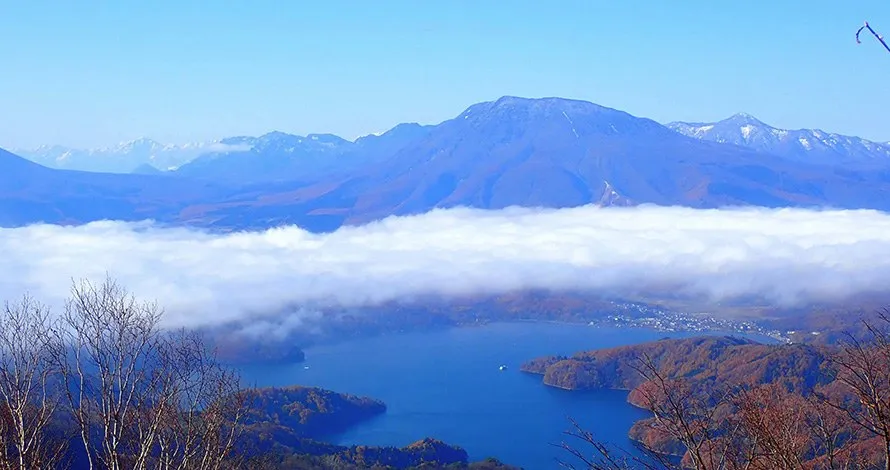
Header photo: “Lake Nojiri with a sea of cloud lying over the water, and mountains beyond” (Ministry of the Environment, Japan / 環境省), https://www.env.go.jp/nature/nationalparks/list/myoko-togakushi-renzan/spot/. Edited (cropped and resized) for use as the header image on this page. Used under the Public Data License (PDL) Version 1.0.
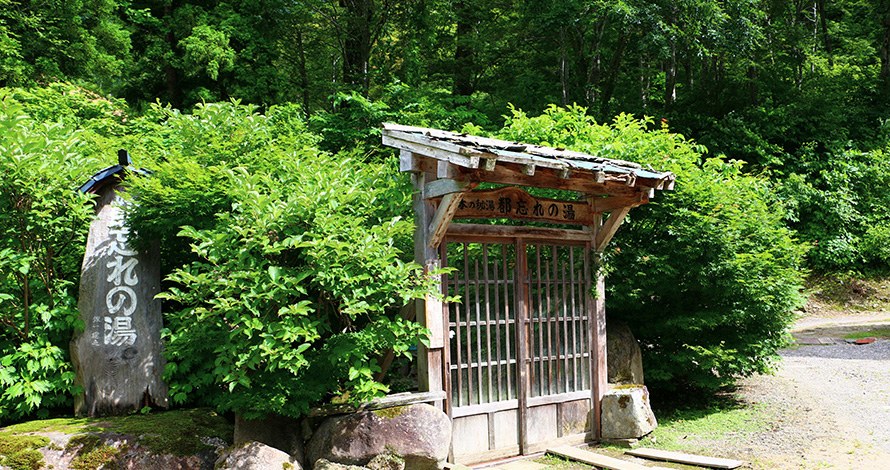
Photo in article: “A stone marker and wooden gate at the entrance to Amakazari Onsen, surrounded by green forest” (Ministry of the Environment, Japan / 環境省), https://www.env.go.jp/nature/nationalparks/list/myoko-togakushi-renzan/spot/. Edited (cropped and resized) for use as the in-article image on this page. Used under the Public Data License (PDL) Version 1.0.
