Myoko Resident Tax: The 1 January Rule, Holiday Homes and Leaving Japan
This guide is for overseas owners of a house in Myoko, and for people who have lived and worked in Myoko and are about to leave Japan. It explains who pays Myoko's resident tax and why the date of 1 January matters. It also explains why a holiday home can bring a yearly bill even if you never registered as a resident, and how to pay after you leave.
Everything below comes from Myoko City's tax pages, read on 22 October 2026. Tax rules change every year, so check the linked pages or ask the city before you act. This is general information, not tax advice. For your own situation, ask a Japanese tax accountant or the city's tax office.
What resident tax is
In Myoko, resident tax is the city and prefectural inhabitants' tax (市民税・県民税). Myoko City calls it a "membership fee for the local community". It has two parts:
- a per capita levy (均等割), a fixed amount charged to a wide range of residents, and
- an income levy, based on what you earned.
The tax is calculated on the previous year's income, from 1 January to 31 December. So the tax for this year is based on what you earned last year.
Why 1 January matters
Myoko City decides who is taxed by looking at the situation on 1 January each year. The city calls this the assessment date.
- If your address was in Myoko on 1 January, you pay both the per capita levy and the income levy.
- If your address was not in Myoko, but you had an office, business premises or a house there, you pay the per capita levy only.
The city says that moving overseas on or after 2 January does not change this. If you lived in Myoko on 1 January, you are taxed for that year even after you leave.
Holiday homes: a bill even without registration
This is the point many overseas owners miss. Myoko City says that a person who is not registered as a resident of Myoko can still be charged the per capita levy. This applies when you have an office, business premises or a house in Myoko that you can use freely at any time.
The city gives examples of such a house: a home for yourself or your family, a holiday home, or an apartment. It adds that a house you rent, rather than own, also counts.
The city says business premises count only when they are in an individual's name. A company is taxed separately, under the corporate inhabitants' tax.
Who does not pay
Myoko City lists people who are not taxed even with an address in Myoko on 1 January. They include people on livelihood assistance, and some people with low income. For example, the per capita levy is not charged to a person with no dependants whose total income for the previous year was ¥380,000 or less. The rules for people with dependants use a formula on the city's page.
Filing and paying
- Filing: you report last year's income to the city where you lived on 1 January, by 15 March. If you filed a national income tax return, the data goes to the city automatically, and you do not need to file a separate resident tax return.
- Tax notice: the city works out the tax and, in principle, sends the notice in June.
- Paying yourself: four instalments, in June, August, November and January. You can pay with the notice or by direct debit.
- Through your employer: most employees pay through their salary, in 12 monthly deductions from June to the following May. The city says some employers cannot do this for part-time or contract staff.
Leaving Japan: pay first, or name a tax administrator
Myoko City explains two cases for people who move overseas:
- You leave before the tax notice arrives (between 2 January and the notice): name a tax administrator, who receives the notice and pays for you.
- You leave after the tax notice arrives: either pay the full year's tax before you go, or name a tax administrator.
A tax administrator (納税管理人) is a person you appoint to handle your tax in Japan: receiving documents, paying, and receiving any refund. The city says it can also be a company.
To appoint one, submit the city's tax administrator form to the Myoko City Citizens' Tax Division. You can send it by post. The city asks for:
- the agreement of the person you appoint,
- your Individual Number (My Number), and
- your My Number card, or your notification card plus ID. If you post the form, send copies.
A note for people who worked in Myoko
Myoko City asks employers of foreign staff who are leaving Japan to act about a month before departure. In some cases, unpaid tax can be collected in full from the last salary. The city says that if you were registered in Myoko on 1 January, you will be taxed for the new year even after leaving, so you should appoint a tax administrator. If you contact the city before you leave, it will give a rough figure for the new year's tax. The city then sends the payment slip to the tax administrator in mid-June.
A checklist
- If you own or rent a house in Myoko and live overseas, expect a per capita levy notice and plan how to pay it.
- If you lived in Myoko on 1 January and are leaving, decide before you go: pay in full, or appoint a tax administrator.
- Agree with your tax administrator in advance, and file the form with the city.
- Keep your My Number card or notification card. You need the number for the form.
- Ask the city for a rough figure for next year's tax before you leave.
What we could not verify, and therefore left out
- The current amount of the per capita levy in Myoko.
- Whether the city sends notices to overseas addresses directly.
- The exact months in the city's employer guidance, which are shown in a table we could not read in text form.
- How resident tax applies to rental income from a Myoko house owned by a non-resident.
- Whether the city can answer questions in English.
Related guides
- Paying Myoko Fixed Asset Tax from Overseas: Dates, Bills and a Tax Agent
- Selling Your Myoko Home as a Non-Resident: 10.21% Withholding and Tax
More from the Journal
Browse every guide in the Myoko Kogen Journal. This guide is general information, not tax or legal advice.
Sources
All URLs retrieved 2026-10-22.
- Myoko City — 市民税・県民税(個人住民税)について (how resident tax works, who is taxed, 1 January rule, holiday homes, exemptions, filing, payment, moving overseas, tax administrator): https://www.city.myoko.niigata.jp/docs/440.html
- Myoko City — 外国人の方を雇用する事業主の方へ(外国人の方が退職し出国する場合の市民税・県民税について) (employers of foreign staff who leave Japan, tax administrator): https://www.city.myoko.niigata.jp/docs/732.html
- Myoko City — 事業主(給与支払者)の皆さまへ:外国人のかたが退職し出国される場合 (PDF guidance for employers): https://www.city.myoko.niigata.jp/fs/2/4/3/7/3/2/_/tax%20payment%20for%20foreigners.pdf
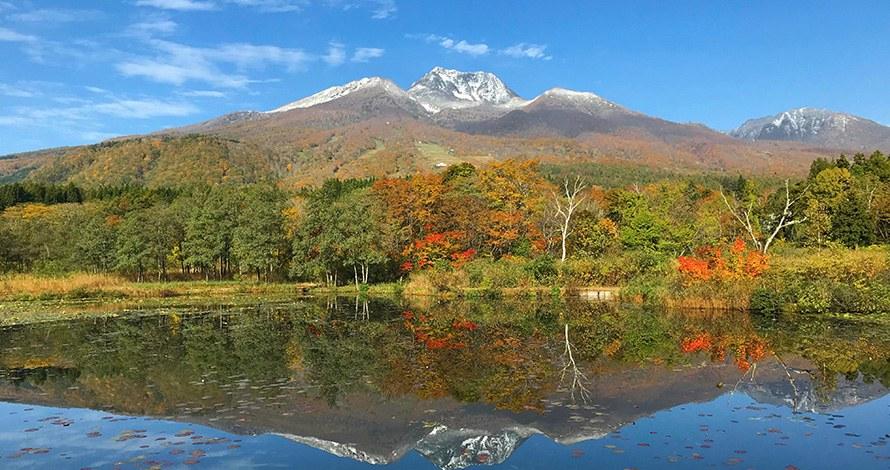
Header photo: “Mount Myoko with early snow, reflected in the still water of Imori Pond, with autumn trees along the shore” (Ministry of the Environment, Japan / 環境省), https://www.env.go.jp/nature/nationalparks/list/myoko-togakushi-renzan/spot/. Edited (cropped and resized) for use as the header image on this page. Used under the Public Data License (PDL) Version 1.0.
