Bears in Myoko: Official Alerts and What They Mean for a Holiday Home
Myoko sits on the edge of a national park, and Asian black bears live in the forests around it. This guide is for anyone living overseas who owns a holiday home in Myoko, or is thinking of buying one. It covers where the official bear alerts are published, what the prefecture and the city ask people to do, and what that means for a house that stands empty for part of the year.
Everything here comes from official sources: pages published by Myoko City, Niigata Prefecture and Japan's Ministry of the Environment. We read them on 28 September 2026. This is general safety information, not expert advice. Alert levels change during the season, so check the current pages before you travel, and follow what the city and the police tell you on the day.
Which bears live around Myoko
The Ministry of the Environment says Japan has two kinds of bear. Brown bears live in Hokkaido. Asian black bears live on Honshu, the main island that includes Niigata, and in parts of Shikoku. They are the largest land mammals in Japan.
The ministry says bears are active from roughly March to November and hibernate from about December to February. A warm winter or local conditions can shift those dates. Black bears live in forests and eat mostly plants, nuts and fruit, as well as insects. They move to different heights on the mountains as the seasons change.
Niigata Prefecture calls the black bear the largest mammal in the prefecture. It says bears normally keep their distance from people. It also says that injuries have happened as more people go into the mountains to climb or to pick wild vegetables and mushrooms.
The prefecture's bear warning in 2026
On 19 May 2026, after a farmer was injured by a bear in Minamiuonuma, Niigata Prefecture issued a bear warning (in Japanese, "kuma shutsubotsu keikai chuihou"). It set the following two months as a period of extra caution. On 17 July the prefecture said it was keeping the warning in place. By then a second person had been injured, and sightings were running at about the same high level as the year before.
In August the prefecture published two more points. Bear sightings this year are the second highest on record, after last year. Its July survey of beech trees also forecast a good crop of beech nuts across the whole prefecture. The prefecture still asks everyone to keep taking precautions.
Myoko City's bear page says the prefecture's warning has been in force since 19 May 2026. The city says people have been injured by bears in Myoko in the past. It expects many more sightings to be reported.
How to check for bears near your house
- The prefecture's map: Niigata Prefecture runs an online map of recent bear sightings, the Niigata bear map. Both the prefecture and the city link to it.
- The city's alerts: Myoko City posts each sighting it is told about on its emergency information page. Each post gives the place and the time. In July and August 2026 these included sightings at Ikenotaira Onsen, Suginohara, Myoko Onsen, Madarao and Sasagamine.
- Before a walk in the national park: the Ministry of the Environment suggests checking the prefecture's sighting information and stopping at a visitor centre. Staff there can tell you the local rules and the latest sightings.
The city pages and the map are in Japanese. A browser's translation feature can help you read the place names and dates.
Around the house: remove what draws bears in
Myoko City lists five points. Two of them are about the land around a house:
- Cut back thick bushes where a bear could hide, around the neighbourhood and along riverbanks.
- Bears have a strong sense of smell. Do not leave food waste or compost outside. Do not leave persimmon or chestnut trees with fruit on them unmanaged.
The prefecture adds two more points. Get rid of food waste, and any fruit or crops you do not need, in the proper way. If you leave food at a family grave as an offering, take it home after your visit.
For an owner who is away for months, this is the part that needs planning. Fruit that ripens and falls while nobody is there can keep attracting bears. A caretaker or neighbour who can deal with fruit, rubbish and overgrown bushes in late summer and autumn is worth arranging.
A city grant for cutting down persimmon and chestnut trees
From the 2026 fiscal year, Myoko City pays part of the cost of cutting down trees that attract bears. The grant covers persimmon, chestnut and other trees within the city that the mayor accepts are dangerous or hard to cut yourself. Trees grown to make money are not included.
- Where: there must be a house where people live within about 100 metres of the tree.
- How: the work must be done by a contractor, and the tree must be cut at the base. Taking the wood away and disposing of it are not covered.
- Who: the owner of the land, a member of the owner's household with the owner's consent, or a local residents' association. The applicant must not be behind on city taxes.
- How much: half of what you pay the contractor, up to 10,000 yen per tree. The limit is five trees per person or group.
The order matters. You first get a quote and apply to the city's Environment and Living Division. Then you wait for the city's decision before the tree is cut. After the work is done and paid for, you send a report, and the city pays the grant into your account. The city pays the grant only within its budget for the year.
When you go into the hills
The prefecture and the city give much the same advice:
- Avoid going into the hills early in the morning and in the evening, when bears are most active. The city asks people not to farm or pick wild vegetables in the mountains at those times.
- Go with other people, not alone, and carry something that makes a noise, such as a bell or a radio.
- If you see a bear cub, do not go near it. Its mother is likely to be close by.
- When hiking, camping or fishing in the mountains, keep a careful watch around you.
The Ministry of the Environment adds a note on bear spray. You cannot take it on board a plane or put it in your checked baggage. So find out before your trip where you can buy or rent it after you land.
If you meet a bear
The ministry says that a bear which is startled or excited may attack. Its advice is:
- Never go closer, and do not approach it to take photos.
- Stay calm and back away slowly while you watch the bear.
- Do not force your way past. Wait for the bear to leave.
- Do not shout, do not turn your back and run, and do not throw things at it.
If a bear attacks, the ministry says to lie face down and protect your neck, face and stomach. The prefecture says the same, and adds that you should guard the back of your neck with both hands. If you carry bear spray, use it, but learn how it works before you need it.
If you see a bear in Myoko, the city asks you to tell its Environment and Living Division, the Myoko or Myoko Kogen branch office, or the Myoko police station. Its bear page lists their phone numbers.
What we could not verify, and therefore left out
The Ministry of the Environment's English leaflet for foreign visitors and its six-point leaflet for people going into the mountains are image files, so we could not read them as text. We quoted the ministry's web page instead. We have not given numbers of sightings or injuries in Myoko, because the city posts sightings one by one and we did not count them. We did not look into how a good beech crop affects bear movements this autumn. We also did not check whether any particular house or street has had bear visits. Ask the city about your own area.
Related guides
- Checking Natural Hazards Before You Buy in Myoko: Floods, Volcanoes, Quakes
- Water and Frozen Pipes in Myoko: Connecting, Closing and Winter Care
More from the Journal
Browse every guide in the Myoko Kogen Journal. This guide is general information, not expert safety advice.
Sources
All URLs retrieved 2026-09-28.
- Myoko City — クマにご注意ください (the prefecture's warning since 19 May 2026, past injuries in the city, five points for residents, where to report a sighting): https://www.city.myoko.niigata.jp/docs/910.html
- Myoko City — 【クマ被害防止】柿・栗の木の伐採費用を補助 (grant for cutting down trees that attract bears: which trees, conditions, who can apply, amount, steps): https://www.city.myoko.niigata.jp/docs/80241.html
- Myoko City — 緊急情報 (emergency information, including each bear sighting reported in the city): https://www.city.myoko.niigata.jp/urgency/
- Niigata Prefecture — 今年度初めてのクマによる人身被害を受け、「クマ出没警戒注意報」を発表しました (warning issued on 19 May 2026 and two-month period of extra caution): https://www.pref.niigata.lg.jp/site/tyoujyutaisakusienn/260519kumachuuihou.html
- Niigata Prefecture — 「クマ出没警戒注意報」を継続します (warning kept in place on 17 July 2026, advice to residents, the Niigata bear map): https://www.pref.niigata.lg.jp/site/tyoujyutaisakusienn/260918kumakyokakikan.html
- Niigata Prefecture — ツキノワグマによる人身被害を防ぐために (about black bears in Niigata and points for preventing injuries): https://www.pref.niigata.lg.jp/site/tyoujyutaisakusienn/1319666477308.html
- Niigata Prefecture — 令和8年度堅果類の豊凶状況調査結果(速報) (beech nut forecast, sightings second highest after last year, grave offerings): https://www.pref.niigata.lg.jp/sec/kankyotaisaku/1319666477310.html
- Ministry of the Environment — 国立公園に出かける前に知っておきたいクマのこと (bears in Japan, avoiding encounters, bear spray and flights, what to do if you meet a bear or are attacked): https://www.env.go.jp/nature/nationalparks/about/bear/
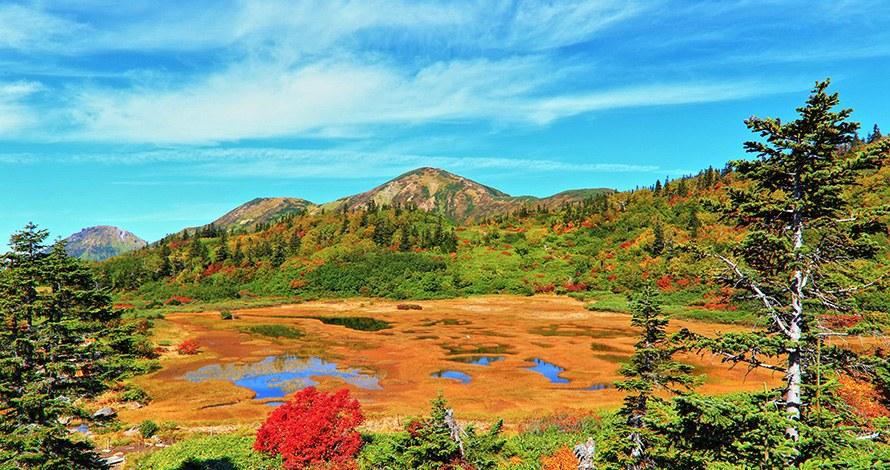
Header photo: “Autumn colours over the Kamikoh marshland on Mount Hiuchi, with red shrubs and small ponds” (Ministry of the Environment, Japan / 環境省), https://www.env.go.jp/nature/nationalparks/list/myoko-togakushi-renzan/spot/. Edited (cropped and resized) for use as the header image on this page. Used under the Public Data License (PDL) Version 1.0.
