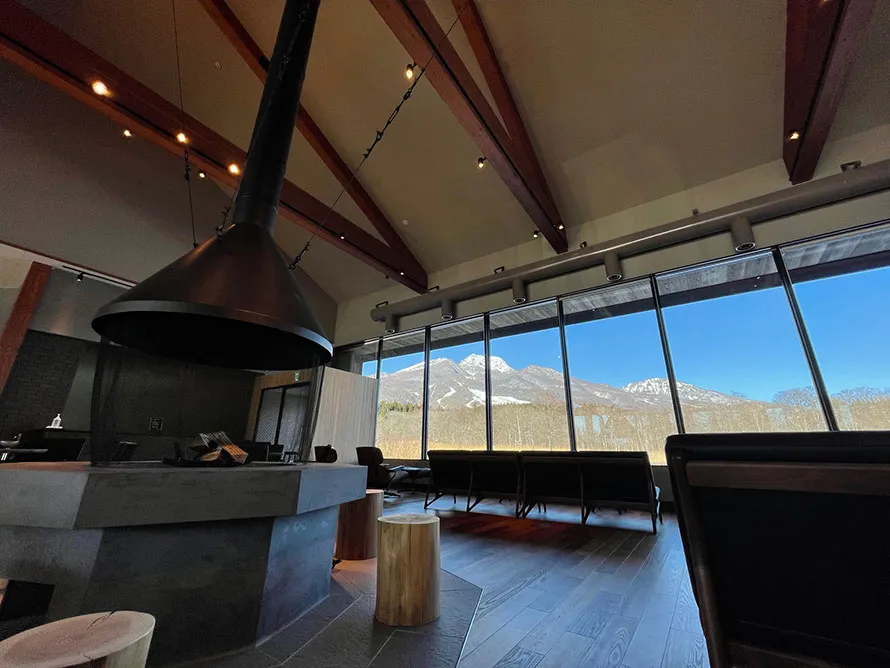
Renting Out Your Myoko Home: The Legal Routes Explained
You have bought a house in Myoko or Akakura, you will use it for part of the season, and you would like it occupied the rest of the year. In Japan, "just putting it on a booking site" is not a legal category: paid overnight accommodation sits under one of three statutory routes, and a fourth option — an ordinary long-term tenancy — sits outside accommodation law altogether. What follows is what each requires, from the statutes and the published guidance of the national ministries, Niigata Prefecture and Myoko City as they stood on 18 September 2026. It is general orientation, not legal, tax or planning advice: before you commit, take your own advice from a Japanese lawyer, a licensed tax accountant (zeirishi) and the relevant authority.
Route 1 — Jūtaku Shukuhaku Jigyō-hō (Private Lodging Business Act, the "minpaku law")
The route most holiday-home owners look at first. The Act defines a private lodging business as accommodating people in a residence for a room charge where "the number of days ... does not exceed 180 days in a year" (Act, Art. 2). The Japan Tourism Agency's portal states the annual ceiling plainly and explains that the counting year runs from noon on 1 April to noon on 1 April the following year; the FAQ confirms nights are counted as "one night = one day" (portal, FAQ).
What it requires:
- Notification, not a licence. You notify the prefectural governor; for Myoko that is Niigata Prefecture, and the notification is filed through the national electronic Minpaku seido unyō system (Art. 3; Niigata Prefecture). Myoko City's own page confirms the counter is the prefecture's Living Sanitation Division, not the city (Myoko City).
- Documents. For an individual these include the registered title certificate (tōki jikō shōmeisho), floor plans showing each room and the areas used by guests, a municipal bankruptcy certificate and a sworn statement on disqualification grounds; tenants and strata-title owners also need the landlord's written consent or a copy of the management rules (attachment list).
- A sign at the property. Operators "must display a sign ... in a place easily visible to the public for each notified residence" (Art. 13).
- A guest register. Names, addresses, occupations and other prescribed particulars must be recorded and kept; the portal states registers are retained for three years and that nationality and passport number are taken for foreign guests without a Japanese address (Art. 8; operator duties).
- Periodic reporting. Guest nights, guest numbers and nationality breakdown are reported to the governor by the 15th of February, April, June, August, October and December, each report covering the preceding two months (Art. 14; portal).
- Mandatory management for absent owners. This is the clause that matters most to an overseas buyer. Where the operator is absent while guests are staying (short, everyday absences excepted), or where the number of rooms exceeds the prescribed figure, the operator must entrust the required measures to a registered jūtaku shukuhaku kanri gyōsha (private lodging management business operator) (Art. 11). The portal notes that everything except the signage is delegated in the owner-absent (yanushi fuzai-gata) case (portal). If you live in Australia, you are the absent-owner case.
- Hygiene and safety floor. The portal sets a minimum of 3.3 m² per guest, plus cleaning and ventilation, emergency lighting, marked evacuation routes, foreign-language information and a neighbour complaints channel (portal).
The Niigata overlay. Article 18 of the Act lets prefectures "limit the period for carrying out the private lodging business ... as specified by Prefectural or Municipal Ordinance". Niigata has done so, through the Niigata-ken jūtaku shukuhaku jigyō no tekisei na un'ei no kakuho ni kansuru jōrei (Niigata Prefectural Ordinance No. 22). The prefecture publishes the restriction as: the area within 100 metres of the grounds of a school (kindergartens and universities excluded), on days when classes are held at that school. The list of affected schools is revised and published in the prefectural gazette (Niigata Prefecture, notification page). Check your address against that list before you buy, not after.
Route 2 — Ryokan-gyō-hō, kan'i shukusho (Hotel Business Act, simple lodging)
If 180 days is not enough, the alternative is a full accommodation licence. Under the Hotel Business Act a kan'i shukusho (rendered in the official translation as "common lodging house") is "the business of running a facility mainly consisting of communal lodging spaces and equipment or furnishings shared by many people, receiving lodging fees, and allowing people to lodge there" (Art. 2).
This is permission (kyoka), not notification, granted by the prefectural governor, and may be refused where the structure, equipment or furnishings fail the prescribed standards, or on school-proximity grounds — roughly 100 metres from schools and child welfare facilities where the institutional environment would be significantly harmed (Art. 3). A guest register is also required (Art. 6). The compensation is that there is no annual day ceiling — the ministry's own comparison records "seigen nashi" (no restriction) for operating days under this Act (comparison).
For Myoko, the relevant office is the Jōetsu Regional Development Bureau, Health, Welfare and Environment Department, which covers both Jōetsu City and Myoko City. Its page lists the three business categories, and states a new permit application fee of ¥22,000 (and ¥7,400 for a succession approval on transfer, merger or inheritance). Required documents include a site map showing a 100-metre radius, floor plans for each level, water-quality test results where the supply is not municipal, building inspection documentation and a fire-law compliance notification (Jōetsu Regional Bureau).
The ministry's comparison also records that hotel-business operation is not permitted in exclusively residential zones, whereas minpaku and special-zone minpaku generally are, subject to local ordinances (comparison). Confirm the yōto chiiki (use zone) of your lot before you plan around Route 2.
Route 3 — Tokku minpaku (National Strategic Special Zone foreign visitor stay business)
This route allows accommodation without the 180-day ceiling, in exchange for a minimum stay — the ministry's comparison records a two-night minimum — and it is granted by certification (nintei) rather than notification (comparison; portal).
The critical point: it is not available in Myoko. The route only exists where a National Strategic Special Zone area plan has been certified and the local authority has enacted an enabling ordinance (Cabinet Office). Within Niigata Prefecture, the authority that has done so is Niigata City, under the Niigata-shi kokka senryaku tokubetsu kuiki gaikokujin taizai shisetsu keiei jigyō ni kansuru jōrei, with a certification fee of ¥21,200 and operation confined to the city's shigaika chōsei kuiki (Niigata City). Myoko City is a separate municipality and publishes nothing equivalent, so treat Route 3 as closed.
The requirements that cut across all routes
Fire. Niigata Prefecture lists the shōbō hōrei tekigō tsūchisho (fire services law compliance notification), obtained from your local fire department, among the documents to attach to a minpaku notification (Niigata Prefecture); the Jōetsu bureau lists the same for a hotel-business permit (Jōetsu). The classification drives the equipment you must install. The ministry's FAQ notes one threshold: for an owner-present arrangement with guest-room floor area of 50 m² or less, the property is treated as a dwelling for fire-law purposes (FAQ) — which, again, is not the absent-owner case.
Other permits. Niigata flags that food service and onsen use pull in their own statutes — the Food Sanitation Act and the Hot Springs Act (Niigata Prefecture). If your property draws on a hot spring, note that Myoko City levies nyūtōzei (bathing tax) as an earmarked municipal tax (Myoko City).
Neighbours. Advance explanation to nearby residents — who the operator is, where the property is, when it starts, and the measures against noise, waste and fire — is part of the Niigata process (Niigata Prefecture).
Route 4 — an ordinary long tenancy
If the accommodation routes look heavier than the use you want, a conventional residential tenancy under the Shakuchi Shakuya-hō (Act on Land and Building Leases, Act No. 90 of 1991) avoids accommodation law entirely — but understand what you are signing up for. Under Article 26, if neither party gives notice between one year and six months before expiry, the lease is deemed renewed on the same terms. Under Article 28, a lessor cannot refuse renewal without justifiable grounds, weighed against both parties' need for the building, the history and condition of the tenancy and any payment offered (Act).
The route back to vacant possession on a fixed date is Article 38, the fixed-term building lease (teiki tatemono chintaishaku): non-renewal may be stipulated only where the contract is in writing, and the lessor must first hand the tenant a separate written explanation that the lease will not be renewed and ends at expiry. Without that explanation the non-renewal clause does not apply (Art. 38). For an owner who wants the house back for next winter, that document is the whole ball game.
Tax, if you live in Australia
Two mechanisms apply.
Withholding at source. A person in Japan who pays rent for real estate to a non-resident must withhold income tax and special reconstruction income tax at 20.42% on payment — and the obligation falls on corporations and individuals, whether or not they are in business. There is a narrow carve-out: no withholding where the payer is an individual renting the land or house for their own or a relative's residence (NTA No. 2880).
Filing and a tax agent. A non-resident with Japanese real-estate income may need to lodge a Japanese tax return, and the withheld 20.42% can be reclaimed through that return. To do it you must appoint a nōzei kanrinin (tax agent) — someone who lodges and pays on your behalf — and file the appointment notification with the tax office for your place of tax payment (NTA No. 1926).
Handing it to a manager
For an absent owner, Route 1 makes a registered management company a legal requirement, not a convenience (Art. 11). Route 2 does not compel it, but someone on the ground must still discharge its continuing duties. The question is therefore not whether to use a manager but which statutory duties your agreement transfers: reporting, the guest register, the neighbour complaints channel, fire equipment upkeep — and the tax agent role, a separate appointment that does not come bundled with property management.
What we could not verify
We could not confirm a Myoko City-specific ordinance or supplementary requirement for private lodging on the city's own site as of 18 September 2026 — its published position is that the notification counter is Niigata Prefecture. We likewise found no published Myoko City accommodation tax. Check both with Myoko City before you commit, and confirm every figure above is still current.
Related guides
- Buying Property in Japan as a Foreigner: An Australian Guide
- Myoko Beyond Winter: Onsen, Green Season and What's Changing
Looking at property in Myoko?
See the homes currently listed on Myoko Property, or send us your questions in English. This guide is general information, not legal or tax advice.
Sources
All URLs retrieved 2026-09-18 (JST).
- https://www.mlit.go.jp/kankocho/minpaku/overview/minpaku/law1.html — 観光庁 民泊制度ポータルサイト「住宅宿泊事業法(民泊新法)とは?」
- https://www.mlit.go.jp/kankocho/minpaku/overview/minpaku/index.html — 観光庁 民泊制度ポータルサイト「はじめに『民泊』とは」(3制度比較表)
- https://www.mlit.go.jp/kankocho/minpaku/overview/minpaku/law2.html — 観光庁 民泊制度ポータルサイト「旅館業法とは」
- https://www.mlit.go.jp/kankocho/minpaku/overview/minpaku/law3.html — 観光庁 民泊制度ポータルサイト「特区民泊について」
- https://www.mlit.go.jp/kankocho/minpaku/business/host/index.html — 観光庁 民泊制度ポータルサイト「住宅宿泊事業者編」
- https://www.mlit.go.jp/kankocho/minpaku/business/host/procedure.html — 観光庁 民泊制度ポータルサイト「住宅宿泊事業者の届出に必要な情報、手続きについて」
- https://www.mlit.go.jp/kankocho/minpaku/business/host/procedure_doc.html — 観光庁 民泊制度ポータルサイト「届出の際の添付書類について」
- https://www.mlit.go.jp/kankocho/minpaku/faq.html — 観光庁 民泊制度ポータルサイト「よくあるご質問」
- https://www.japaneselawtranslation.go.jp/en/laws/view/4402/tb — Ministry of Justice, Japanese Law Translation: Private Lodging Business Act (住宅宿泊事業法), Japanese/English table format
- https://www.japaneselawtranslation.go.jp/en/laws/view/3272/en — Ministry of Justice, Japanese Law Translation: Hotel Business Act (旅館業法)
- https://www.japaneselawtranslation.go.jp/en/laws/view/3787/en — Ministry of Justice, Japanese Law Translation: Act on Land and Building Leases (借地借家法), Act No. 90 of 1991
- https://www.pref.niigata.lg.jp/sec/seikatueisei/1356887762670.html — 新潟県「住宅宿泊事業法のページ」(新潟県条例第22号)
- https://www.pref.niigata.lg.jp/sec/seikatueisei/1356889222256.html — 新潟県「(3)住宅宿泊事業の届出」
- https://www.pref.niigata.lg.jp/sec/jouetsu_kenkou/1204131670748.html — 新潟県 上越地域振興局「【上越】旅館営業の各種手続きについて」
- https://www.city.myoko.niigata.jp/docs/97.html — 妙高市「民泊の事前受付を開始(届出窓口は新潟県)」
- https://www.city.myoko.niigata.jp/docs/439.html — 妙高市「妙高市の税」(入湯税・固定資産税・都市計画税)
- https://www.city.niigata.lg.jp/kurashi/kankyo/kankyoeisei/kankyoeisei/kankyoeisei20200220.html — 新潟市「新潟市国家戦略特別区域外国人滞在施設経営事業の申請手続きについて」
- https://www.chisou.go.jp/tiiki/kokusentoc/tocminpaku.html — 内閣府地方創生推進事務局「旅館業法の特例(特区民泊)について」
- https://www.nta.go.jp/taxes/shiraberu/taxanswer/gensen/2880.htm — 国税庁 タックスアンサー No.2880「非居住者等に不動産の賃借料を支払ったとき」
- https://www.nta.go.jp/taxes/shiraberu/taxanswer/shotoku/1926.htm — 国税庁 タックスアンサー No.1926「海外勤務中に不動産所得などがある場合」
Header photo: “Myoko-Togakushi Renzan National Park” (Ministry of the Environment, Japan / 環境省), https://www.env.go.jp/nature/nationalparks/list/myoko-togakushi-renzan/spot/. Edited (cropped and resized) for use as the header image on this page. Used under the Public Data License (PDL) Version 1.0.
