Myoko Beyond Winter: Onsen, Green Season and What's Changing
Most Australians meet Myoko in January, in a whiteout, somewhere between Akakura and Suginohara. Far fewer have seen it in July. If you are weighing up a holiday house or a longer-term base in the area, the other nine months matter more than the three — and so does the question of what the place will look like in five years.
Everything below is drawn from Japanese government, prefectural, council or operator sources, with the year of each figure stated. Where we could not verify something, we have said so rather than filled the gap.
The town you would actually be buying into
Myoko is a city, not a hamlet with a chairlift. As at 31 August 2026 the council's resident register recorded 28,407 people — 13,966 men and 14,441 women — living in 12,154 households.
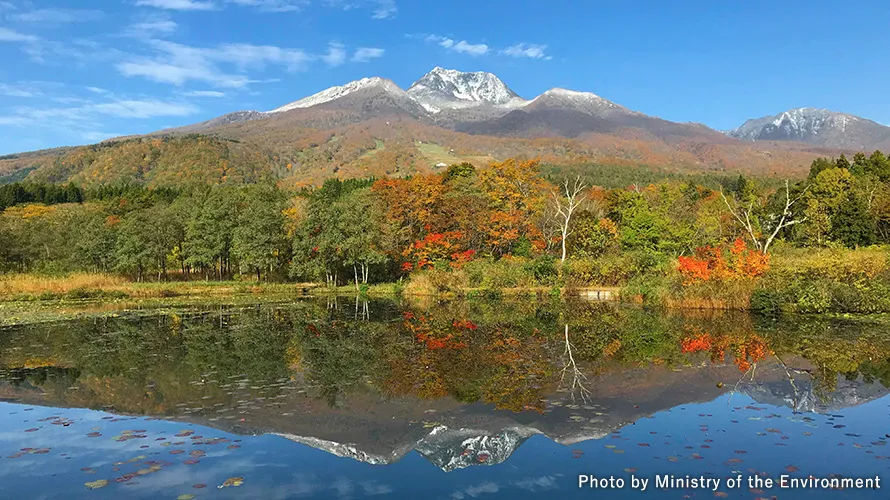
The municipality covers 445.63 square kilometres, about 3.5 per cent of Niigata Prefecture. It borders Joetsu and Itoigawa in Niigata, and Iiyama, Nagano, Otari and Shinano in Nagano Prefecture. The council states that the area around the foot of Mount Myoko lies within Myoko-Togakushi Renzan National Park.
That park is young. The Ministry of the Environment records its designation as 27 March 2015 and its area as 39,772 hectares, spanning two prefectures and six municipalities (Itoigawa, Myoko, Nagano, Otari, Shinano and Iizuna). The ministry describes a landscape of volcanic ranges, calderas, isolated non-volcanic peaks, plateaus above 1,000 metres such as Sasagamine, and lakes including Nojiri — with year-round hot spring use as a defining feature of how people actually visit.
Climate: the numbers, not the marketing
The Japan Meteorological Agency's AMeDAS station at Sekiyama, in Niigata, publishes 30-year normals for 1991–2020:
- Annual mean temperature 11.9°C. January averages 0.0°C; August averages 24.4°C.
- Annual precipitation 1,924.4 mm, with a December–January peak (256.6 mm and 284.2 mm) and a dry April (74.2 mm).
- Annual cumulative snowfall of 1,061 cm — January 385 cm, February 291 cm, December 220 cm.
- Normal deepest snow on the ground: 204 cm for the year, peaking in February at 192 cm.
Read those as a valley-floor baseline for one station. Myoko spans hundreds of metres of altitude and Sekiyama does not stand in for every part of it.
The lived version of those normals: in the 2025 heavy-snow event, the council set up an emergency response headquarters on 11 February 2025 and upgraded it to a heavy-snow disaster headquarters the next day. The national Disaster Relief Act was applied to Myoko City — the Myoko Kogen area only — from 12 February, and the application was later extended to 28 February. A snowmelt-hazard headquarters ran until 30 April.
Seven onsen villages, five water types
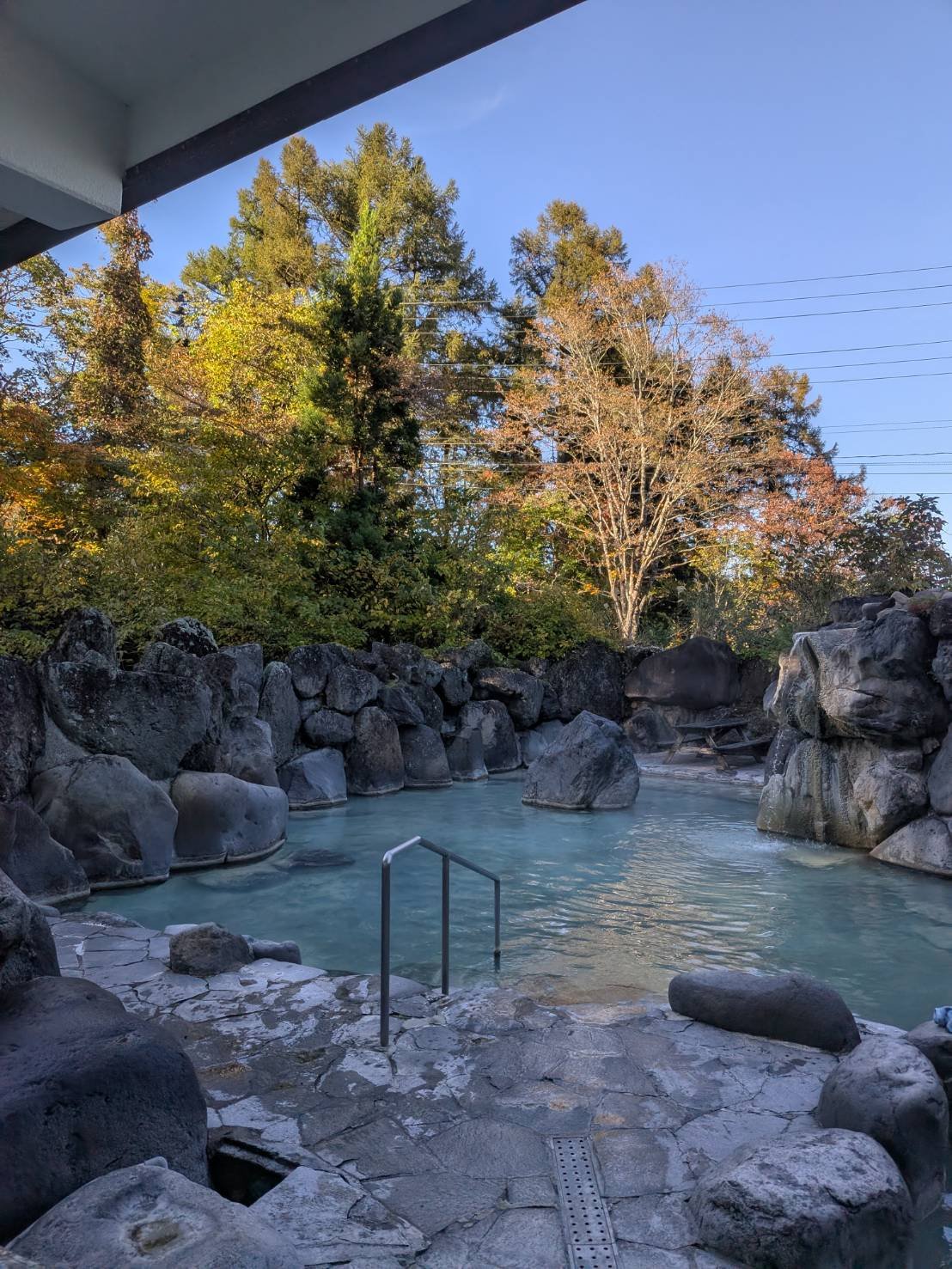
The Myoko Tourism Board groups the area's springs as the Myoko Kogen Onsen-kyo, nicknamed "Myoko Nagomi no Yu" for its seven hot spring areas and five spring qualities:
- Akakura, around 800 m — calcium, magnesium and sodium sulfate/bicarbonate water, clear, with the board citing 3,000 litres per minute.
- Shin-Akakura, around 700 m — calcium, sodium and magnesium sulfate/bicarbonate, clear.
- Ikenotaira, around 750 m — simple spring and simple sulfur spring at 72°C; some facilities offer black mud baths.
- Suginosawa, around 700 m — sodium, calcium and magnesium bicarbonate/chloride.
- Myoko Onsen, around 550 m — simple spring.
- Tsubame, around 1,100 m and the highest of the seven — sulfur-bearing sodium and calcium bicarbonate/sulfate/chloride, known for white mineral flakes.
- Seki, around 900 m — sodium chloride/bicarbonate, which turns a tea-brown colour on standing.
For a buyer, the practical point is that "Myoko onsen" is not one product. Water type, altitude and village character differ across roughly 550 metres of vertical.
The green season
- Mount Myoko, 2,454 metres. The Ministry of the Environment lists Myoko and Takatsuma among Japan's 100 Famous Mountains inside the park.
- Imori Pond, at Ikenotaira, is about 500 metres around and reflects the mountain on clear days — the easiest walk in the district.
- Sasagamine plateau, 1,300 metres. The council describes cattle grazed through to autumn, a stand of about 10,000 German spruce across 60 hectares, the Yumemidaira walking tracks with courses from 4 km to 10 km, Lake Otomi, a campground and a rest house.
- Naena Falls is roughly a 15-minute walk from the car park.
- The tourism board also lists trekking, general outdoor sports and bicycle hire as green-season activities.
What national park status means if you own something there
This is the part most overseas buyers skip. Under the Natural Parks Act, national parks are zoned into Special Protection Districts, Special Zones (Classes 1 to 3), Marine Park Districts and General Zones. The Ministry of the Environment states plainly that building a house in a Special Zone requires permission from the Minister of the Environment — in some prefectures, the governor. Applications are assessed against nationwide criteria in Article 11 of the Act's enforcement regulations plus region-specific criteria set in each park's management plan. General Zones operate on a notification basis rather than permission.
So before falling for a view, confirm which zone the land sits in, and confirm it in writing. Myoko City also maintains its own development permission pages separately from the park regime.
Everyday infrastructure
Schools. The council lists seven municipal primary schools, three junior high schools and one comprehensive special-support school.
Health. The council's medical directory lists nine medical facilities, of which three are hospitals — JA Niigata Kouseiren Keinan General Hospital and Niigata Prefectural Myoko Hospital, with the Joetsu holiday and night clinic listed for after-hours — plus twelve dental practices.
Getting there. The tourism board puts Tokyo to Joetsu-Myoko at a fastest 1 hour 50 minutes on the Hokuriku Shinkansen. IHG's own release describes the Suginohara site as roughly a three-hour drive or two-hour train trip from Tokyo. Seasonal shuttles run between Akakura Onsen and Myoko Suginohara, and between Lotte Arai Resort, Akakura Onsen and Madarao.
Snow, as an administrative fact. The council operates five classes of cleared route — special, all-day-assured, and Types 1 to 3 — and publishes alert snow depths by district: 200 cm for Arai, 250 cm for Myoko and 300 cm for Myoko Kogen. For FY2026 it is running a snow-resilient housing subsidy covering melting, snow-shedding and snow-load-bearing designs, with caps ranging from ¥330,000 to ¥750,000 depending on method, household category and zone; applications run 11 May to 11 December 2026, first-come until the budget is exhausted.
Vacant houses. The city runs an akiya bank. Registration is required before you can inspect a listed property; the contact point is the Community Co-creation Division's relocation support group.
What is changing — publicly announced only
A branded hotel is committed. On 24 October 2025, InterContinental Hotels Group announced that Six Senses had signed a hotel management agreement with Patience Capital Group for a slopeside hotel and residences at the foothills of Mount Myoko, inside the Suginohara ski resort. The release specifies 57 rooms and suites, many with private onsen, and 21 branded residences, alongside two restaurants, a bar and a spa with eight treatment rooms. Architecture is credited to Kengo Kuma and Kume Sekkei. Construction is stated to commence in April 2026. The release gives no opening date.
The wider programme is a stated intention, not a delivered project. A post on the developer's own website, dated 19 November 2024 and updated 2 June 2025, relays a Niigata Nippo interview with PCG chief executive Ken Chan describing a first phase of about ¥70 billion completing at the end of 2028, within a multi-phase programme of about ¥200 billion, with ground broken after the snow melts in 2026. Weigh that as the developer's plan, sourced to a newspaper interview.
Inbound demand is at a record. JNTO reported on 21 January 2026 that Japan received 42,683,600 foreign visitors in 2025, up 15.8 per cent on 2024, and that Australia passed one million annual arrivals for the first time — the seventh market to do so.
Land prices: what the official survey actually said. Niigata Prefecture published the 2026 national land price survey (valuation date 1 January 2026) on 18 March 2026. Prefecture-wide averages fell: residential −0.5 per cent, commercial −0.5 per cent, all uses −0.4 per cent. Within that, the prefecture notes Myoko City's commercial land moved from decline to increase, and attributes price rises at some points in Yuzawa and Myoko to growth in tourism including inbound visitors. That is a record of movement to 1 January 2026. It is not a forecast, and nothing here should be read as one.
Council planning. The 4th Myoko City Tourism Promotion Plan runs from FY2025 to FY2029.
What we could not verify, and therefore left out
Myoko City's own annual visitor-arrival and foreign guest-night figures (published only in PDFs we could not read); the city's formal designation status under the Special Measures Law for Heavy Snowfall Areas; any opening date for the announced hotel; and supermarket or retail specifics.
Related guides
- Myoko Ski Areas and Snowfall: What the Official Records Show
- Renting Out Your Myoko Home: The Legal Routes Explained
Looking at property in Myoko?
See the homes currently listed on Myoko Property, or send us your questions in English. This guide is general information, not legal or tax advice.
Sources
All URLs retrieved 2026-09-18.
- Myoko City — 妙高市の人口 (population and households, as at 31 August 2026): https://www.city.myoko.niigata.jp/docs/456.html
- Myoko City — 妙高市の位置・紹介 (area, borders, national park): https://www.city.myoko.niigata.jp/docs/771.html
- Ministry of the Environment — 妙高戸隠連山国立公園 公園の特徴 (designation date 27 March 2015, 39,772 ha): https://www.env.go.jp/park/myokotogakushi/point/index.html
- Ministry of the Environment — 国立公園一覧: 妙高戸隠連山国立公園: https://www.env.go.jp/nature/nationalparks/list/myoko-togakushi-renzan/
- Japan Meteorological Agency — 関山 (新潟県) 平年値 1991–2020, monthly/annual: https://www.data.jma.go.jp/stats/etrn/view/nml_amd_ym.php?prec_no=54&block_no=0998
- Myoko City — 令和7年豪雪に関する情報 (Disaster Relief Act application, February 2025): https://www.city.myoko.niigata.jp/docs/66897.html
- Myoko Tourism Board — 温泉 (seven onsen areas, spring qualities, altitudes): https://myokotourism.jp/onsen/
- Myoko Tourism Board — 夏のおすすめスポット (Imori Pond, Sasagamine, Naena Falls, Mount Myoko 2,454 m, cycle hire): https://myokotourism.jp/natsu/
- Myoko City — 自然いっぱい雲上の楽園 笹ヶ峰高原 (Sasagamine detail): https://www.city.myoko.niigata.jp/docs/971.html
- Ministry of the Environment — 国立公園における届出・申請 (zone types, permission vs notification): https://www.env.go.jp/park/apply/park_apply.html
- Myoko City — 妙高市内の小中学校・特別支援学校: https://www.city.myoko.niigata.jp/docs/438.html
- Myoko City — 妙高市内の医療機関: https://www.city.myoko.niigata.jp/docs/838.html
- Myoko Tourism Board — 妙高へのアクセス (Tokyo–Joetsu-Myoko fastest 1h50, shuttles): https://myokotourism.jp/access/
- Myoko City — 除雪体制 (route classes, alert snow depths by district): https://www.city.myoko.niigata.jp/docs/423.html
- Myoko City — 妙高市雪国妙高住まいの克雪対策推進事業 (FY2026 subsidy, caps, application window): https://www.city.myoko.niigata.jp/docs/4790.html
- Myoko City — 住宅(妙高市空き家バンク): https://www.city.myoko.niigata.jp/myoko-life/house/
- Myoko City — 移住・定住サイト: https://www.city.myoko.niigata.jp/myoko-life
- InterContinental Hotels Group PLC — "Six Senses Myoko ushers in a new era of purposeful rejuvenation in Japan's historic ski region", 24 October 2025: https://www.ihgplc.com/en/news-and-media/news-releases/2025/six-senses-myoko-ushers-in-a-new-era-of-purposeful-rejuvenation-in-japans-historic-ski-region
- Patience Capital Group (developer's own site) — "Patience Capital Group Myoko resort project aims to break ground by summer 2026", posted 19 November 2024, updated 2 June 2025, relaying a Niigata Nippo interview: https://www.patiencerealty.com/post/patience-capital-group-myoko-resort-project-aims-to-break-ground-by-summer-2026
- JNTO — 訪日外客数(2025年12月推計値), published 21 January 2026: https://www.jnto.go.jp/news/press/20260121_monthly.html
- Niigata Prefecture — 令和8年地価公示結果の概要 (valuation date 1 January 2026; released 18 March 2026): https://www.pref.niigata.lg.jp/site/yochi/kouji08.html
- Myoko City — 第4次妙高市観光振興計画 (FY2025–FY2029): https://www.city.myoko.niigata.jp/docs/105.html
Header photo: “Myoko-Togakushi Renzan National Park” (Ministry of the Environment, Japan / 環境省), https://www.env.go.jp/nature/nationalparks/list/myoko-togakushi-renzan/spot/. Edited (cropped and resized) for use as the header image on this page. Used under the Public Data License (PDL) Version 1.0.
