Building or Renovating in Myoko's National Park: Permits and Design Rules
Much of the Myoko Kogen area, including the Akakura, Ikenotaira, Seki and Tsubame hot spring villages, sits inside Myoko-Togakushi Renzan National Park. If you buy land or a house there, building, extending or even repainting the roof can need a permit from the national government. This guide is for overseas buyers and owners. It explains how the park rules work, what the local design standards ask for, and when the prefecture's landscape rules also apply.
Everything below comes from the Ministry of the Environment's national park pages and the park's management plan, the Natural Parks Act and its Enforcement Regulations on Japan's e-Gov law database, and Niigata Prefecture's landscape pages. We read all of them on 15 October 2026. This is general information, not legal or planning advice. Before you buy or plan any work, ask the Ministry's local office about your own site.
The whole park is a special zone
Japan's national parks are divided into zones. The rules depend on the zone your land is in. The Ministry of the Environment lists the zones for Myoko-Togakushi Renzan National Park as follows:
- Special protection zone: 3,552 ha.
- Class 1 special zone: 4,812 ha.
- Class 2 special zone: 15,026 ha.
- Class 3 special zone: 16,382 ha.
- Ordinary zone: 0 ha.
The park covers 39,772 ha in total, of which 21,442 ha is in Niigata. It was designated on 27 March 2015. About 5,070 ha of it is private land.
That zero matters. In many national parks, an ordinary zone only needs a notice for larger works. Here, every part of the park is at least a special zone, so the permit rules below apply wherever your land is inside the park.
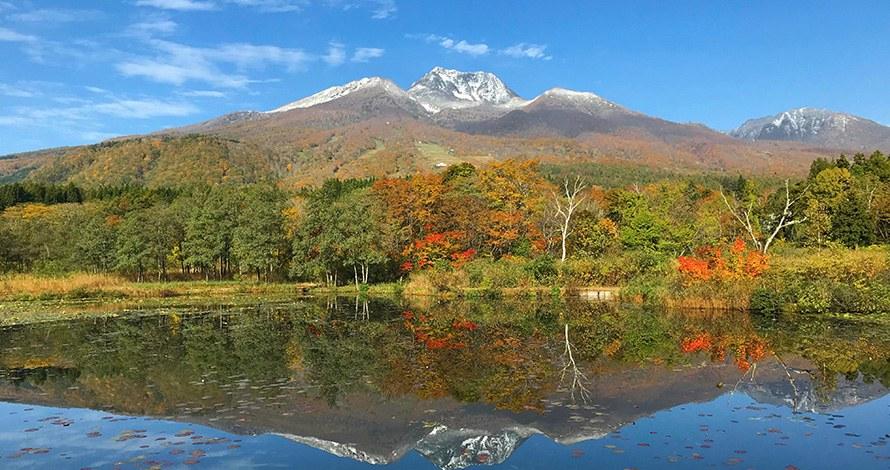
The management plan describes the Myoko Kogen area as the land below about 1,500 m. It names the Akakura, Ikenotaira, Seki and Tsubame hot spring villages, the ski areas, Imori Pond and Naena Falls. Above about 1,500 m are the steep peaks from Mt Myoko to Mt Hiuchi and Mt Yake.
What needs a permit
Under Article 20 of the Natural Parks Act, you need the Minister of the Environment's permission before you do any of these in a special zone. These are the items most likely to matter to a home owner:
- Building, rebuilding or extending a structure. The Ministry's form list gives houses and roads as examples.
- Cutting down trees.
- Changing the shape of the land, such as clearing or levelling it.
- Putting up signs or advertising.
- Storing soil, stone or other materials outdoors, where the Minister has listed them.
- Changing the colour of a roof, wall, fence or similar.
The Ministry gives a separate application form for each of these, and says applications can be sent by email.
What does not need a permit
Article 12 of the Enforcement Regulations lists minor works that need neither a permit nor a notice. Examples that a home owner may meet:
- Gates and hedges.
- Cutting trees on residential land.
- Burying water pipes, gas pipes or power cables in residential land.
- Putting up a TV aerial.
- Solar panels on the roof of an existing building, if they use a colour and form the Minister has approved, and the area is not one the Minister has excluded.
There is also an exception for emergency work after a disaster. If you do that work, you must tell the Minister within 14 days (Article 20).
How a permit application is judged
The Ministry says each application is checked against two things. The first is the national standard in Article 11 of the Enforcement Regulations. The second is the standard set for each area in its management plan. It says a permit usually takes about one to three months, depending on the work.
The national standard has different rules for different kinds of building. Here are the main points we read:
- Rebuilding at the same size. Rebuilding an existing building, or rebuilding one lost in a disaster, is treated more lightly if it is no bigger than before. Its colour and form must not clash badly with the surroundings.
- A new house for a person who must live on the site, such as someone working in farming or a park business: no more than 13 m high.
- Other new buildings, outside the special cases: no more than 13 m high, and not in the special protection zone or a class 1 special zone. They must also keep a set distance from roads and from the edge of the plot, and not sit on land steeper than 30%. How much of the plot they may cover, and their total floor space, are limited by zone and plot size.
- Plots in a subdivision, apartments and holiday apartment blocks have their own, stricter rules.
Which of these rules applies to a given site is something to confirm with the Ministry's office before you buy or design.
Local design standards in the Myoko Kogen area
The park's management plan, dated June 2022, sets the local standards. Its general standard for buildings asks for the following:
- Roof shape: a gable, hip or similar roof with a pitch of at least 2 in 10. Small sheds and garages that support the main building are an exception.
- Roof colour: dark brown or black. Natural materials such as wood or stone can stay their own colour.
- Walls: white or brown, in wood, plaster or other natural materials, or materials that look like them.
- Garages and sheds: built into the main building where possible. If they stand apart, they should match it in design, colour and materials.
- Outdoor lights: not used to light up the building.
- Distance from the road: because this is snow country, keep the building as far as you can from the road and the plot boundary, with snow clearing in mind.
The plan also asks, as a wish rather than a rule, that owners keep trees or plant around the building, and match the height and roof direction of nearby buildings.
Some villages have their own extra standards:
- Akakura Onsen: buildings must meet a set of special standards made for this park. A single-slope roof is allowed where it cannot be avoided because of falling snow or roof clearing. The plan asks that new or extended buildings on Ginza-dori and Onsen-dori stand as far back from the road as they can.
- Seki Onsen and Tsubame Onsen: a single-slope roof is allowed on the same grounds.
- Ikenotaira Onsen: about 800 m above sea level is the upper limit. Above that, only public facilities and farming, forestry or fishing facilities can be newly built. Buildings must not block the view from Imori Pond towards Mt Myoko. Untreated waste water must not go into Imori Pond or the streams that flow into it.
- The mountain area: only public facilities and farming, forestry or fishing facilities can be newly built.
For all works, the plan also asks that anything which could be done outside the park is done outside it. Surplus soil should be taken out of the park where possible, and building waste as a rule.
Who to ask, and when
The Ministry's office list gives the Myoko Kogen Ranger Office, in Sekikawa, Myoko, as the office for the Myoko City and Itoigawa City parts of the park. It comes under the Shinetsu Regional Environment Office.
Since 1 April 2022, applications go straight to the Ministry, even in areas where they used to go through the prefecture. The Ministry says the right place to send them depends on the work, so it asks people to confirm this when they consult in advance. It also notes that other laws may apply as well, such as the Forest Act for protected forests or the cultural properties law.
Why this matters when you buy
Article 34 of the Act lets the Minister order someone who breaks the permit rules to stop. The Minister can also order the land or building to be put back as it was. That order can be given to a person who later took over the rights to that land or building, not only the person who did the work. If you are looking at a house in the park, it is worth asking whether past extensions and colour changes had permits.
Niigata's landscape rules on top
Myoko is inside Niigata Prefecture's landscape plan area, as at 1 September 2020. Separate from the park rules, larger works there need a notice to the prefecture:
- A new building with a footprint over 1,000 square metres, or taller than 15 m.
- Extensions to buildings that end up over those sizes, above set limits.
- Repainting or re-cladding a building of that size, where more than half of a wall or roof face changes.
The prefecture says you cannot start the work, as a rule, until 30 days after it accepts the notice. Since 1 April 2022, notices go through its online application system. It offers advance advice by email.
A short checklist before you buy or build
- Find out whether the land is inside the park, and which zone it is in. The park plan maps are on the Ministry's site.
- Before you design, talk to the Myoko Kogen Ranger Office about the plan and which rules apply.
- Choose roof and wall colours that meet the local standard. A colour change needs a permit too.
- Allow one to three months for a permit, and do not start work before it is granted.
- When buying, ask whether earlier work on the house had the permits it needed.
- For a large building, check whether a landscape notice to Niigata Prefecture is also needed.
What we could not verify, and therefore left out
Exact zone boundaries for any village or plot; whether particular houses or plots on the market are inside the park; the full text of the special standards for Akakura; whether an application fee is charged; whether the office can work in English; how city planning rules and building approval apply on top of the park rules; and how often permits are refused in practice.
Related guides
- Rice Fields and Forest Land in Myoko: Permission and Notification Rules
- Myoko Home Subsidies: Buying, Renovating and Moving In, Who Qualifies
More from the Journal
Browse every guide in the Myoko Kogen Journal. This guide is general information, not legal or planning advice.
Sources
All URLs retrieved 2026-10-15.
- Ministry of the Environment — 国立公園における届出・申請 Applications and notices in national parks (zones, permit for houses in special zones, Article 11 and area standards, one to three months, direct submission from 1 April 2022, other laws): https://www.env.go.jp/park/apply/park_apply.html
- Ministry of the Environment — 国立公園において許可又は届出が必要な行為と様式 Acts that need a permit or notice, and forms (application by email): https://www.env.go.jp/park/apply/basic_01.html
- Ministry of the Environment — 妙高戸隠連山国立公園 概要・計画書 Myoko-Togakushi Renzan National Park: overview and plans (area by zone, land ownership, designation date, plan maps): https://www.env.go.jp/park/myokotogakushi/intro/index.html
- Ministry of the Environment — 妙高戸隠連山国立公園管理運営計画書 本文 Management plan, June 2022 (Myoko Kogen area; permit standards for buildings, Akakura, Seki, Tsubame, Ikenotaira and the mountain area): https://www.env.go.jp/park/content/000105026.pdf
- e-Gov Laws — 自然公園法 Natural Parks Act (Articles 20, 33 and 34): https://laws.e-gov.go.jp/law/332AC0000000161
- e-Gov Laws — 自然公園法施行規則 Enforcement Regulations of the Natural Parks Act (Articles 11 and 12): https://laws.e-gov.go.jp/law/332M50000100041
- Ministry of the Environment — 国立公園 事務所等一覧 List of national park offices (Myoko Kogen Ranger Office): https://www.env.go.jp/park/office.html
- Niigata Prefecture — 新潟県景観計画区域内における行為の届出について Notices for works in the Niigata landscape plan area (30-day rule, online system, advance advice): https://www.pref.niigata.lg.jp/site/toshiseisaku/keikantodokede.html
- Niigata Prefecture — 県景観計画区域 Prefectural landscape plan area (as at 1 September 2020): https://www.pref.niigata.lg.jp/uploaded/attachment/234265.pdf
- Niigata Prefecture — 届出対象行為 Works that need a landscape notice (sizes): https://www.pref.niigata.lg.jp/uploaded/attachment/234266.pdf
Header photo: “Mount Myoko with early snow, reflected in the still water of Imori Pond, with autumn trees along the shore” (Ministry of the Environment, Japan / 環境省), https://www.env.go.jp/nature/nationalparks/list/myoko-togakushi-renzan/spot/. Edited (cropped and resized) for use as the header image on this page. Used under the Public Data License (PDL) Version 1.0.
