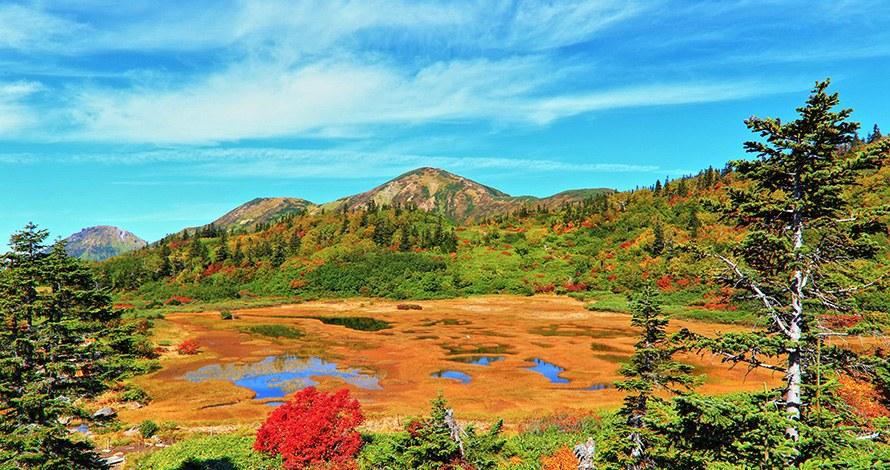
What Is Imori Pond? Myoko's Mirror Pond, Nature Garden and Visitor Center
Imori Pond is a small pond at Ikenotaira, in the Myoko Kogen area, where Mt Myoko is reflected in the water on a clear day. Next to it are a nature garden that a local farmer opened to the public, and the national park visitor centre. This guide explains what Imori Pond is, its story, what lives there, and what is nearby, for visitors and for owners who want somewhere close to take guests.
Everything below comes from Myoko City, the Ministry of the Environment and the Japan Tourism Agency, all read on 3 November 2026. Opening hours and facilities change, so check before you go.
What Imori Pond is
- Where: Ikenotaira, Myoko City, inside Myoko-Togakushi Renzan National Park.
- Size: 12,295 square metres. Myoko City says it was made from marshland in 1927.
- The view: on clear days, Mt Myoko (2,454 m) is reflected in the pond.
- The walk: an easy trekking path goes around the pond.
"Imori" is the Japanese word for a newt. The Ministry of the Environment describes the pond as a place full of life all year round.
The nature garden and its story
Beside the pond is Ikenotaira Nature Garden. Myoko City tells how it began with a chance meeting. One day a farmer, Eitaka Takeo (1912–2010), found an artist painting on his land. The artist came often to capture the changing seasons, and told him that, as the owner, he had a responsibility to protect the scenery.
The farmer was so moved that he decided to open his land to the public. Eitaka Nature Park opened in 1975. In 2018, his two sons gave the two-hectare park to the city, to protect it from development.
Near the north-east corner of the boardwalk, a stone memorial carries poems by Yosano Akiko (1878–1942), the poet and writer, who was inspired by the beauty of the park.
What lives here
- Frogs: the pond is home to the forest green tree frog, a species found only in Japan.
- Orchids: mizuchidori, a member of the butterfly orchid family, flowers from late June to early July.
- Birds and insects: the Ministry of the Environment says more than 100 species of wild birds have been recorded, along with dragonflies and butterflies.
- A spring messenger: the Japanese yellow bunting arrives around Imori Pond before the trees come into leaf. The ministry says it is loved as a bird that announces spring in snow country.
- Winter: on the snowshoe course, you may see hares and Japanese squirrels moving through the forest.
Myoko Kogen Visitor Center
The national park visitor centre is right next to the pond. The Japan Tourism Agency's description says it covers the region's natural wildlife, onsen and ski culture, and has a scale model of the area so you can see where everything is. The Ministry of the Environment adds that the lounge has a view of Mt Myoko and a café.
The centre runs seasonal events. They range from snowshoe trekking in winter to bird watching and guided walks in spring and summer.
Food and a foot bath
The Japan Tourism Agency's description mentions a restaurant and rest area by the pond, serving tempura, soba and soft-serve ice cream topped with mochi. Next to the restaurant there is an ashiyu, a foot bath, to warm up on a cool day. The agency also notes that the pond is popular with artists and photographers.
Visiting safely
Bears live in the Myoko area. Myoko City's emergency information page lists each bear sighting reported in the city, including some at Sasagamine. Check it before a walk on forest paths, and see our guide to bears in Myoko below.
Getting there
Myoko City's Myoko Sanroku bus line, which runs in the green season, circles the tourist spots of the Myoko Kogen area. Check the city's bus page for the current route and times.
What we could not verify, and therefore left out
- The visitor centre's opening hours, fees and closing days.
- The opening hours of the restaurant and foot bath.
- The best weeks for the skunk cabbage flowers in spring.
- Parking at the pond.
- Whether the Sanroku bus stops at Imori Pond itself.
Related guides
- What Is Naena Falls? Myoko's 55-Metre "Earthquake Falls"
- Bears in Myoko: Official Alerts and What They Mean for a Holiday Home
More from the Journal
Browse every guide in the Myoko Kogen Journal.
Sources
All URLs retrieved 2026-11-03.
- Myoko City — Ikenotaira Nature Garden "Imori Pond" (English): https://www.city.myoko.niigata.jp/docs/31648.html
- Myoko City — 池の平自然園「いもり池」 (Japanese, location): https://www.city.myoko.niigata.jp/docs/31647.html
- Ministry of the Environment — 妙高戸隠連山国立公園 見どころ (Imori Pond, Japanese yellow bunting, visitor centre): https://www.env.go.jp/nature/nationalparks/list/myoko-togakushi-renzan/spot/
- Japan Tourism Agency multilingual commentary database — Imori Pond: https://www.mlit.go.jp/tagengo-db/en/H30-00596.html
- Japan Tourism Agency multilingual commentary database — Myoko Kogen Visitor Center: https://www.mlit.go.jp/tagengo-db/en/H30-00589.html
- Myoko City — 緊急情報 (emergency information, including each bear sighting reported in the city): https://www.city.myoko.niigata.jp/urgency/
- Myoko City — 妙高市市営バス (Myoko Sanroku line): https://www.city.myoko.niigata.jp/docs/892.html
Header photo: “Autumn colours over the Kamikoh marshland on Mount Hiuchi, with red shrubs and small ponds” (Ministry of the Environment, Japan / 環境省), https://www.env.go.jp/nature/nationalparks/list/myoko-togakushi-renzan/spot/. Edited (cropped and resized) for use as the header image on this page. Used under the Public Data License (PDL) Version 1.0.
